


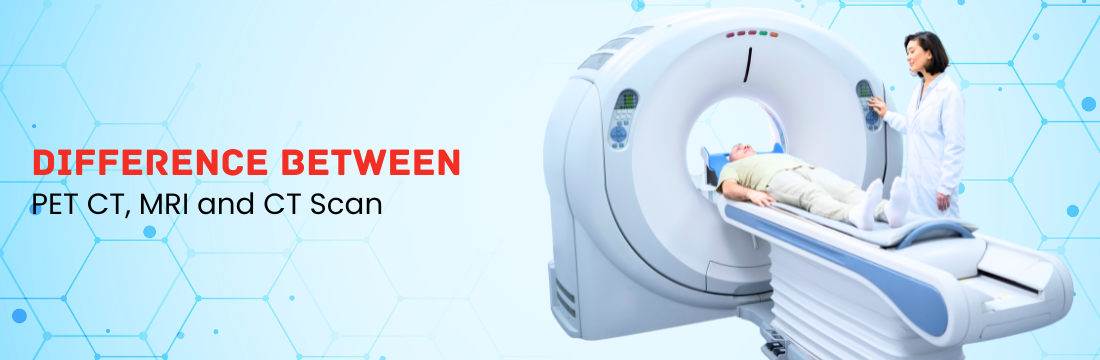
PET CT, MRI and CT are three important and advanced radio diagnostic procedures which uses different kinds of radiations for the detection of abnormalities.
PET CT, MRI and CT are three important and advanced radio diagnostic procedures which uses different kinds of radiations for the detection of abnormalities. These procedures are non invasive and have different principle of working. Each diagnostic procedure is having its advantages and disadvantages depending on the use. Each diagnostic procedure is suggested by the doctor after the condition and related symptoms. All these procedures sound similar but they work differently and used to detect particular condition. MRI uses magnetic waves, CT uses ionized radiations and PET uses radioactive tracer with radiations for the detection of cancer. All these procedure have revolutionized the diagnosis practice in healthcare industry and helps to give customized treatment to the patient.
Overview of Medical Imaging
Medical imaging diagnostic procedures are very helpful for doctors for the detection of abnormality without going for surgery. These procedures help to detect inside of the body with the help of radiations, magnetic waves and radioactive tracers. Most advanced and major diagnostic procedures are PET CT, MRI and CT scans.
- PET CT (Positron Emission Tomography – Computed Tomography) offers both metabolic and anatomical information.
- MRI (Magnetic Resonance Imaging) provides high-resolution images of soft tissues.
- CT (Computed Tomography) focuses on detailed structural imaging.
All the above mentioned scans have their advantages and limitations. Doctor will recommend the procedure after knowing the pros and cons of the scan.
1. What is a CT scan?
CT scan is advanced imaging scan that uses radiations for creating cross-sectional images within the body to detect the abnormalities. The scan is very quick, non-invasive and effective in detecting various types of abnormalities in the body like injuries, infections, tumors etc.
How it Works:
- CT scanner uses radiations and rotates around the body for capturing various abnormalities in the body.
- Computer uses images to process and helps to create 3D images, which helps in easy and early detection of abnormalities.
Uses:
- Used to detect fractures
- To detect internal bleeding and organ injuries
- To detect and identify blood clots
- Help to detect infections
- Help to guide biopsies
Advantages:
- Fast and painless.
- Helpful in bone imaging.
- Helpful in dense structures
- Fast and useful in emergency situations
Limitations:
- Involves radiation exposure.
- Limited ability to distinguish soft tissues compared to MRI.
2. What is MRI Scan?
MRI is the short form of Magnetic Resonance Imaging scan, which uses strong magnetic waves for the detection of abnormalities. MRI is very effective in soft tissues and other body structures.
How it Works:
- The magnetic field aligns hydrogen atoms in the body.
- Radio waves disrupt this alignment, and sensors detect the returning signals.
- A computer then converts these signals into detailed images.
Uses:
- Helpful in detecting spinal abnormalities
- Helpful in detecting spinal cord
- Help to evaluate joint condition
- Helpful in diagnosis of tumors
Advantages:
- No radiation exposure.
- Superior soft-tissue contrast and clarity.
- Can visualize organs, nerves, and brain activity.
Limitations:
- Procedure is Expensive.
- MRI is time-consuming.
- Cannot be used in patients with pacemakers and metal implants.
- Can cause discomfort because of loud noise of machines.
3. What is PET CT Scan?
PET CT is the short form of Positron Emission Tomography (PET) with Computed Tomography (CT) that helps to create images and detect cancer at the metabolic level. This procedure uses radioactive tracer for the detection of abnormalities.
How it Works:
- A small amount of radioactive tracer (commonly FDG, a glucose compound) is injected into the patient’s bloodstream.
- Cancer or diseased cells absorb more of this tracer because they are more metabolically active.
- The PET scan detects this activity, while the CT scan provides anatomical reference.
Uses:
- Helps to detect cancers at metabolic stage.
- Helps to detect stage of cancer.
- Helpful in monitoring the treatment response like chemotherapy or radiotherapy.
- Evaluating heart and brain function.
Advantages:
- Detects cancer at metabolic level.
- Help to customize treatment for patient.
- Helps to avoid unnecessary surgeries.
Limitations:
- Diagnostic procedure uses radiation exposure
- Very expensive comparing other diagnostic procedures
- Limited availability comparing CT and MRI
4. Key Differences Between PET CT, MRI and CT Scan
S. No.
Features
CT Scan
MRI Scan
PET CT Scan
1.
Type of Imaging
Structural
Structural
Functional + Structural
2.
Technology Used
X-rays
Magnetic field & radio waves
Radioactive tracer + X-rays
3.
Radiation Exposure
Yes
No
Yes (low to moderate)
4.
Best For
Bones, lungs, injuries
Brain, muscles, soft tissues
Detecting cancer, metabolic activity
5.
Scan Time
5–10 minutes
30–60 minutes
20–40 minutes
6.
Cost (Approximate)
Moderate
High
Highest
7.
Availability
Widely available
Widely available
Limited to advanced centers
8.
Image Detail
Excellent for dense structures
Excellent for soft tissues
Functional plus anatomical clarity
9.
Contrast Agents Used
Iodine-based
Gadolinium-based
Radioactive glucose (FDG)
10.
Primary Use Fields
Trauma, chest, abdomen
Neurology, musculoskeletal
Oncology, cardiology, neurology
List of PET CT scans, MRI and CT scans available at Ganesh Diagnostic Center
PET CT Scans
- DOTA PET CT scan (Book Now)
- PSMA PET CT scan (Book Now)
- Brain PET CT scan (Book Now)
- F-18 Choline PET Scan (Book Now)
- Cardiac PET CT scan (Book Now)
- FDG-PET scan (Book Now)
Click Here for the list of all Types of PET CT scan
MRI Scans
- MRI Head Screening (Book Now)
- MRI Screening of Brain (Book Now)
- MRI Screening Cervical Spine (Book Now)
- MRI Face & Neck (Book Now)
- MRI Lower Abdomen (Book Now)
Click Here to any type of MRI Scan
CT Scans
CT Orbit Scan (Book Now)
3D CT Ankle (Book Now)
3D CT Cervical Spine (Book Now)
CT Scan Brain (Book Now)
CT Bronchoscopy (Book Now)
Click Here for any type of CT scan
Conclusion
PET CT, MRI and CT scan are three important and advanced diagnostic procedures in healthcare industry. They are non-invasive, quick and help to detect condition without going for surgery. Each diagnostic procedure is having its advantages and disadvantages depending on the use. Each diagnostic procedure is suggested by the doctor after the condition and related symptoms. All these procedures sound similar but they work differently and used to detect particular condition. MRI uses magnetic waves, CT uses ionized radiations and PET uses radioactive tracer with radiations for the detection of cancer.