


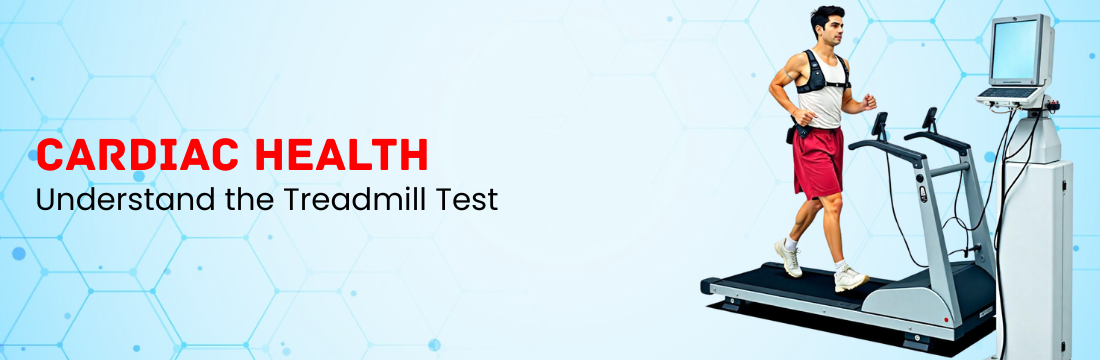
The Treadmill Test, or Cardiac Stress Test, at Ganesh Diagnostic and Imaging Centre, a leading diagnostic center in Delhi, helps evaluate your heart's function during exercise.
A healthy heart, of course, is the thing to strive for, and periodic visits at times merely amount to more acute noticing of its function, especially under stress. The Treadmill Test, also known as the Cardiac Stress Test or Exercise Tolerance Test (ETT), is a revealing diagnostic that can measure your heart's function when stressed. We conduct a proper and proper Treadmill Tests at Ganesh Diagnostic and Imaging Centre, best rated diagnostic centre and best rated imaging centre of Delhi. Details of procedure will give you confidence and enable you to perform without difficulty at our centrally located lab near me, one amongst a chain of quality labs of Delhi NCR.
Treadmill Test is an out-patient test that identifies concealed cardiac illnesses like coronary artery disease (narrowing of heart vessels) or arrhythmias (irregularitiesMeta Description of heartbeats), which are not detected in resting heart conditions. By gradually adding to the intensity of exercise on a treadmill and at all times tracking the electrical activity of your heart (with electrocardiogram or ECG), blood pressure, and heart rate, our skilled cardiologists can determine how your heart reacts under stress. This helps detect heart disease, measure the impact of heart therapy, and identify the level of safe exercise. Preparation: Preparing for Your Treadmill Test
In regard to getting proper and safe results, you are respectfully asked to take proper precautions before preparation for your Treadmill Test at Ganesh Diagnostic and Imaging Centre. Our well-trained staff shall attend to you personally, but as a precautionary measure, the following may be expected:
Your Doctor's Visit: Your ordering physician will decide if a Treadmill Test test is necessary after talking with you about your symptoms and history. Tell him about any questions or worries you have before this.
Medication Review: Tell your doctor all your current medications, including over-the-counter and prescription drugs and supplements. There are medications that may be stopped or skipped before testing, including beta-blockers since it affects your heart rate response. Your physician will instruct you.
Fasting: Steer clear of large meals, coffee (tea, energy drinks), or cigarettes at least 2-3 hours prior to the test since they impact your heart rate and blood pressure. It is acceptable to have a light meal or snack some hours beforehand unless otherwise instructed.
Footwear and Clothing: Wear loose clothing that provides freedom of movement. Wear simple walk-or-run-around shoes (sneakers) with good support.
Inform Us If You Have a Medical Condition: Inform our staff if you have a pre-existing medical condition, e.g., asthma, diabetes, or recent illness, as they will impact your ability to exercise or interpret the test.
Rest Well in Advance: Rest well the night before when you are taking the test so that you will be rested and ready for the exercise.
Procedure: What Happens During the Test
Ganesh Diagnostic and Imaging Centre Treadmill Test is performed by specially trained cardiac technologists under the supervision of cardiologists. This is step-by-step detailed information of what is done:
Introduction and Explanation: greeted with a friendly smile by our staff, we explain to you all phases of the test patiently while taking extra care to answer any last minute questions that you may have.
Electrode Application: Small, adhesive strips of tape known as electrodes will be placed on your chest, arms, and legs. The electrodes are connected to an electrocardiograph (ECG) machine that will record the heart's electrical activity at all times.
Resting Measurements: Resting blood pressure and heart rate will be measured before exercising. Baseline ECG tracing also will be obtained.
Treadmill Exercise: You will walk increasingly on the treadmill. Speed and slope of the treadmill are increased stepwise at regularly preprogrammed time intervals (every 2-3 minutes) by a routine protocol (e.g., the Bruce protocol). Stepwise increase in workload exactly replicates stress to your heart from physical work.
Continuous Monitoring: Throughout the time you are being tested, your ECG, heart rate, and blood pressure will be monitored continuously. You will be asked if you are having any symptoms that you have been experiencing, including pain in the chest, feeling breathless, lightheadedness, or tiredness. Pain must be told to the technician straight away.
Reaching Target Heart Rate or Symptom Limitation: We will stop the exercise test once you have reached your target heart rate (after considering your age and disease), have achieved clearly defined symptoms which will prevent you from exercising, or show clearly defined ECG changes to require stopping the test for safety purposes.
Cool-Down Phase: Once you've completed exercising on your treadmill, your incline and speed will come down slowly over time as your heart rate and blood pressure are returned to baseline. Monitoring is done during cool-down.
Post-Test Monitoring: Following cool-down, you'll usually sit or rest for a few minutes while heart rate and blood pressure are monitored until they normalize. Electrodes are removed.
Post-Procedure: Understanding Your Results
After your Treadmill Test at Ganesh Diagnostic and Imaging Centre
Normal Activities: You can usually go back to your normal activities as soon as the test is over.
Review of Results: Your ECG tracings, your blood pressure response, your heart rate response, and symptoms that you experienced during the test will be examined by one of our experienced cardiologists in detail.
Report to Your Doctor: The referring doctor will be provided with a comprehensive report of your Treadmill Test and he/she will also inform you about the results, what they indicate, and what treatment or follow-up care may be needed.
Tests that you should book today for early detection of heart and cardiac diseases?
There are various types of tests used to diagnose chest pain, which include:
- Electrocardiogram (ECG) (Book Now)
- CT scan Chest (Book Now)
- Chest X-ray (Book Now)
- Echocardiogram (echo) (Book Now)
- Stress tests (Book Now)
- Cardiac PET (Book Now)
- FDG PET scan (Book Now)
Conclusion
We at Ganesh Diagnostic and Imaging Centre, a good lab near me and one among Delhi NCR's best-ranked labs, offer complete cardiac checkup with latest technology and professional medical personnel.
Our patient care and service are why we are among Delhi's finest diagnostic centers and finest imaging centers for the Treadmill Test. If you have been advised a Treadmill Test by your doctor, then you can be assured of receiving a complete and comprehensive diagnosis of your heart condition from Ganesh Diagnostic.
FAQs
Q. Q. What is the cheapest cost of chest scan in Delhi ncr?
To know about the cost of chest pain at ganesh diagnostic and imaging centre you can call us or visit our website.
Q. Can anxiety cause chest pain?
Yes, panic attacks and anxiety cause chest pain due to hypertension or hyperventilation, muscle tension, or increased heart rate.
Q. Where to do a Cardiac Thrust test in Delhi?
Patients can choose Ganesh Diagnostic Centre for any type of heart with heavy discounts and quality results.
Q. What is the ICD-10 code for Cardiac Thrust Unspecified?
The ICD-10 code for unspecified Cardiac Thrust is I51.9.