



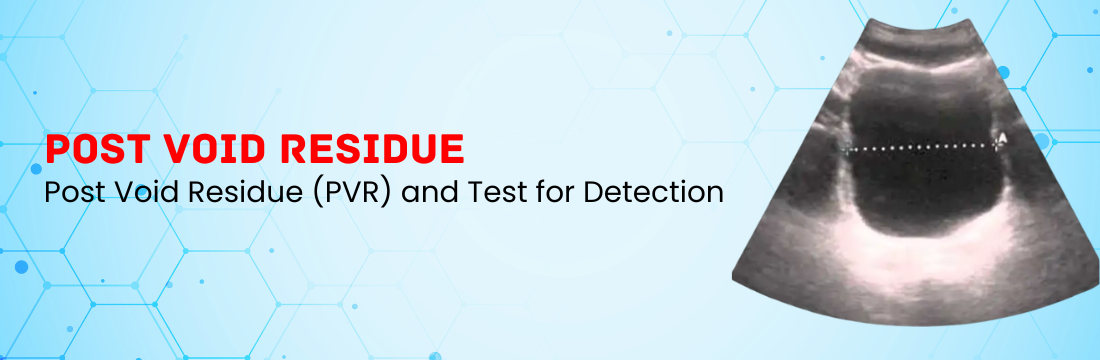
Post Void Residue (PVR) is the residual of the urine in the bladder after the person has completed urination. PVR USG (ultrasound) is a non-invasive radiological tool that uses sound waves for the detection of abnormalities in...
Post Void Residue (PVR) is the residual of the urine in the bladder after the person has completed urination. PVR USG (ultrasound) is a non-invasive radiological tool that uses sound waves for the detection of abnormalities in the bladder and the reasons for the retention of urine in the bladder. USG Post Void Residue (PVR) allows the sound waves to pass through and help visualize the condition of the urinary bladder. Post Void Residue (PVR) ultrasound can be done with and without the contrast material, based on the need and suggestion of a healthcare expert.
What is Post Void Residue (PVR) Ultrasound?
Post Void Residue (PVR) Ultrasound (USG) is a noninvasive diagnostic technique that uses sound waves for the detection of abnormalities in the urinary bladder. USG Post Void Residue (PVR) is a diagnostic tool like CT, MRI and PET and this procedure helps to capture images of the urinary bladder to detect the abnormalities. USG Post Void Residue (PVR) can detect various conditions in the bladder like cancers, infections, lumps, tissue tears etc.
What does Post Void Residue (PVR) Ultrasound Show?
There are various conditions that can be shown by Post Void Residue (PVR) ultrasound and these include:
- To look for blood vessels in the urinary bladder. Post Void Residue (PVR)
- To look for urinary bladder tumors
- To look for infections in the urinary bladder
- To evaluate pain in the urinary bladder
- To look for the reason for urine retention in the urinary bladder.
Which Tests are used to check for the Post Void Residue (PVR) Abnormalities?
There are various types of tests used to check for Post Void Residue (PVR) abnormalities and these include:
- Post Void Residue (PVR) Ultrasound (Book Now)
- Uroflowmetry (Book Now)
- Ultrasound KUB (Book Now)
Conclusion
Post Void Residue (PVR) ultrasound (USG) is the diagnostic tool used for the detection of abnormalities in the urinary bladder and the reason for the retention of urine. There are various uses of USG Post Void Residue (PVR) like the detection of tumors, the shape and size of the urinary bladder. USG Post Void Residue (PVR) is also done with and without the use of contrast material, this is also called CEUS Post Void Residue (PVR) or contrast-enhanced ultrasound.
Frequently Asked Questions (FAQ)
What is Post Void Residue (PVR) Ultrasound?
Post Void Residue (PVR) ultrasound scan is a diagnostic procedure that uses sound waves with computer technology for the detection of abnormalities in the urinary bladder.
Can an Ultrasound scan detect urinary bladder Tumors?
Yes, USG Post Void Residue (PVR) is an effective diagnostic tool for detecting urinary bladder tumours.
Where is the USG Post Void Residue (PVR) Centre near me in Delhi?
Patients can visit Ganesh Diagnostic Imaging Centre for a USG Post Void Residue (PVR) scan with heavy discounts. For more information and an appointment, click here.