



The Blood tests are important to understand the working of the organs in your body. Whether it is done for addressing any general health or in case this is done to prevent the serious diseases, there are multiple important...
The Blood tests are important to understand the working of the organs in your body. Whether it is done for addressing any general health or in case this is done to prevent the serious diseases, there are multiple important blood tests done for the kids, acting as the essential diagnostic tools.
Though the kids seem to possess robust immune systems, they would act and be prone to host of the infections and different disorders. Sometimes your blood tests are also considered to be useful in detecting any congenital and the hereditary disorders.
It is also important to understand what all would be the important blood tests for the pediatric population and to provide an effective care for the children. You can also get lab test home service for these Blood Tests from Ganesh Diagnostic Center, the Blood Test Lab near you.
Though the routine screenings could be avoided in the growing kids, there are also certain situations when the pediatrician might order the tests
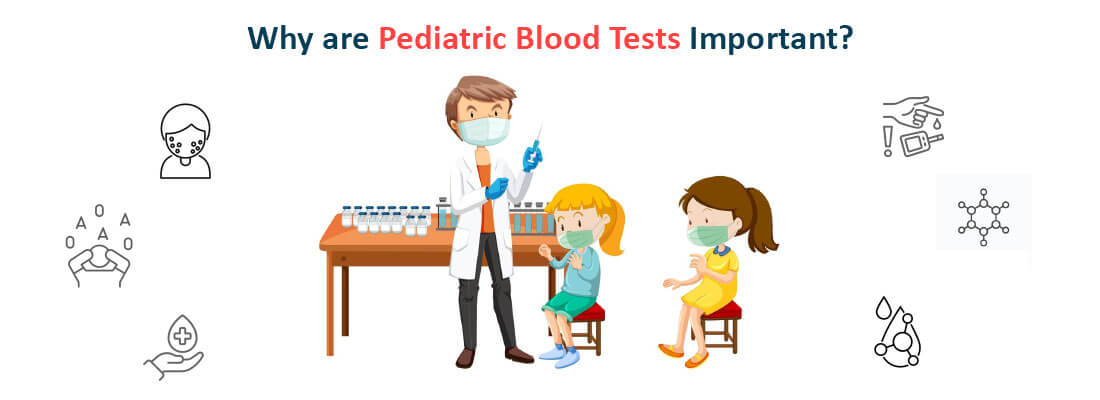
Why are the Pediatric Blood Tests Important?
The child’s pediatrician in general orders of the tests to look for the different signs that point towards any underlying problems. There are different symptoms which are caused by the signs that are not usually detected by the general physical examination. The Important blood tests that are conducted for the kids in general help doctor take the closer look and also detect problems early.
Here are some of the common reasons, why the tests would be ordered:
- To check for any abnormalities
- To check for bodily chemicals triggering allergies
- To look for your child’s blood group for your future medical records
- Measure the child’s blood sugar if the family comes with a history of diabetes, or if you want to monitor type-1 diabetes in children.
- Measure levels of the different excretory products , for ex: urea to assess kidney function
- Electrolytes and enzymes test
- Understand the acid base balance
- Screen for any active infections
Understanding Blood Test Results
It is seen that usually level of the different cells and your substances could be measured to check if it falls in the ‘normal' range.
In case, it becomes lower or even higher than the normal range, the child would require treatment to effectively deal with your problem.
What are the different Screening Blood Tests for Pediatric Population?
For an annual checkup, the regular physical examinations and the different screening tests are considered to be important part of the preventive healthcare in children. When you assess the age of your child, along with the factors, would determine the tests that are considered to be necessary.
The Common screening tests would include the following:
- Vision Screenings
- Hearing Screenings
- Tuberculosis Screen Tests
- Hemoglobin Blood Test
- Blood Cholesterol
- Urinalysis to look for infections
- Lead Exposure Blood Testing
- Test For Sickle Cell Disease
- Routine Laboratory Screening
- HIV Screening For The Adolescents
- Screening For The Hepatitis C Virus (HCV) Infection
Types of Blood Test
1. Full blood count (CBC)
The Blood is seen to be made in bone marrow, which could be the spongy material in the middle of bones. Your full blood count (CBC) measures amount of the following cells
To get your CBC Test: Book Now!
2. Blood Grouping Test
It is seen that everybody has blood cells that have specific markers on the surfaces called the antigens.
These antigens are also categorized into the four different types which are under the ABO system of your blood grouping. The different antigens are A, B, AB, and also O.
Based on the antigens, there are four blood groups found in all human beings. There is another important antigen that categorizes the blood groups is the Rh antigen that would be checked in your blood test.
To get your Blood Group Test: Book Now!
3. Pediatric Lipid Profile
These days, there is an increase in the unhealthy lifestyles, increased obesity, and with high sugar diets, even In the children that are now deemed being at risk of the high cholesterol.
The lipid profile would measure amount of the high-density lipoprotein (good cholesterol), the low-density lipoprotein (bad cholesterol), your total cholesterol, and the triglycerides (freely present fats) in your bloodstream.
The test could be avoided in the children below age of two and any pubescent teenagers due to any fluctuating lipid levels.
The normal values in Children are as follows: