



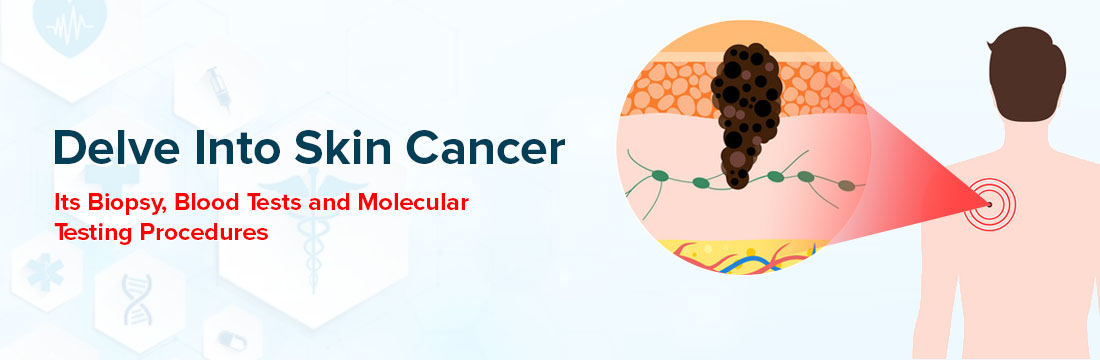
In case of Skin cancer if there is any abnormal growth of the skin cells. It most often develops on the skin that is exposed to the sun. It is understood to be a common form of the cancer can also occur on areas of your skin...
In case of Skin cancer if there is any abnormal growth of the skin cells. It most often develops on the skin that is exposed to the sun. It is understood to be a common form of the cancer can also occur on areas of your skin that ordinarily helps in exposing to the sunlight.
In case of diagnosing your skin cancer usually begins with the visual examination. The Skin Cancer Foundation and the American Cancer Society would generally recommend self-examinations and your annual doctor visits to screen the skin cancer.
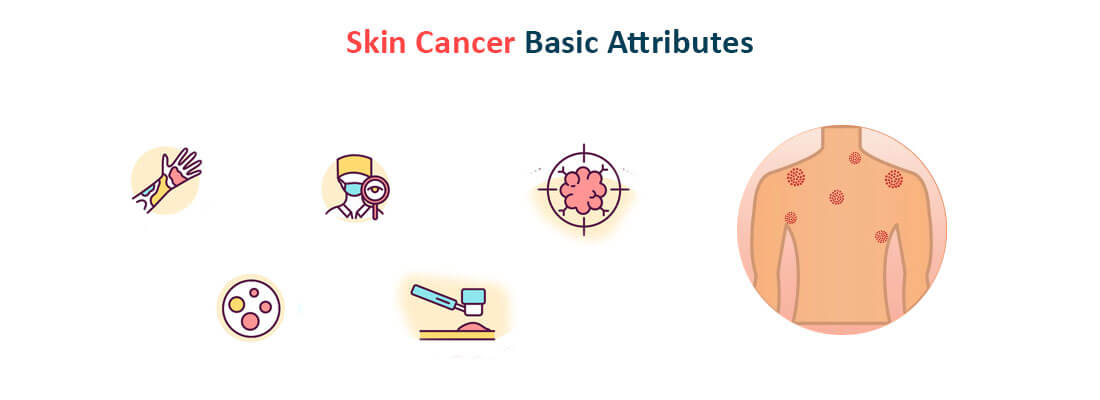
Skin Cancer Basics
The healthcare professional aids and detects the following in your sample mass to understand the physical aspect of your tissue better. Given below are some attributes that are assessed:
- Noting Its Size
- Shape
- Color
- Texture
- Bleeding
- Scaling
It is also seen, that your healthcare professional looks for adjacent lymph nodes for its enlargement. The dermatologist in general looks for any advanced testing and it identifies the skin cancer. The doctor would check for the irregular region on the skin that may be cancerous and may perform tests to rule out melanoma, another type of skin cancer, or another skin issue.
If you are being seen by your primary doctor and melanoma is suspected, you may be referred to a dermatologist, a doctor who specializes in skin diseases, who will look at the area more closely.
Physical Examination and Medical History
Your doctor will typically start by asking you about your symptoms, including when the skin mark first emerged, whether its size or look has changed, and whether it has hurt, itched, or bled. Inquiries may also be made on your family history of melanoma or other skin cancers, as well as potential risk factors for the disease, such as history of sunburns and tanning.
Your doctor will make note of the area(s) in issue during the physical examination, including its size, shape, color, texture, and whether it is bleeding, oozing, or crusting. Your body may be examined for moles and other lesions that may be connected to skin cancer on the rest of it.
Techniques Involved in Skin Cancer Screening and Detection
Skin Biopsy
A skin biopsy can be performed in a variety of methods. Based on the location of the damaged area on your body, its size, and other variables, the doctor will determine which is ideal for you. Regardless of the type of biopsy, the goal is to remove as much of the suspected area as possible in order to provide a precise diagnosis.
Any biopsy will probably result in at least a minor scar. Before the biopsy, ask your doctor about scarring as different techniques can leave different kinds of scars.
There are several types of skin biopsy, including:
-
Shave biopsy: The physician removes a tiny layer of skin from above or surrounding a lesion.
-
Punch biopsy: The physician removes a circular portion of the lesion through all layers using a tool known as a punch.
-
Excisional biopsy: The entire lesion is removed by the physician using a knife. For minor lesions, this technique is employed.
-
Incisional biopsy: A small sample of a big lesion is removed by the clinician using a knife.
To Book for Biopsy at Ganesh Diagnostic and Imaging Center are as follows: