



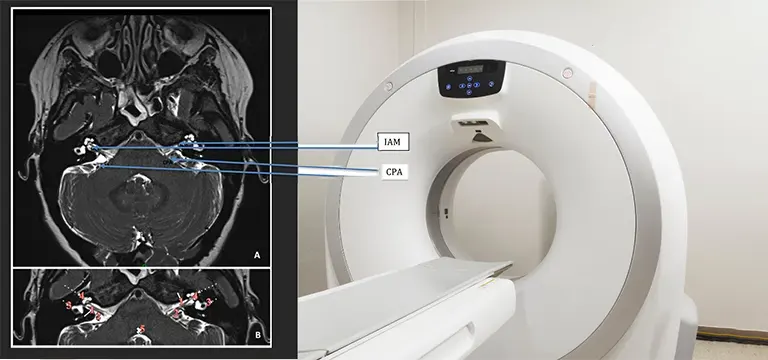
Vertigo is defined as disorientation in space. In this condition a person has the sensation of spinning or if the surrounding objects in the environment is moving when they are actually not moving.
Vertigo is defined as disorientation in space. In this condition a person has the sensation of spinning or if the surrounding objects in the environment is moving when they are actually not moving.
This sensation can be accompanied with nausea, vomiting, sweating, or even difficulties in walking. It typically get worsen by the movement of head.
Vertigo is not a disease itself rather it is presenting symptom of various disease or disorders.
Usually disorders of vestibular system cause vertigo and is classified as:
Peripheral vertigo : It accounts for 85% cases of vertigo and is caused by inner ear pathology involving the vestibular end organs ( semicircular canals, utricle and saccule) and the vestibular nerve( 8th cranial nerve).
Causes of peripheral vertigo includes:
1) Benign paroxysmal positional vertigo (BPPV) - It is the most common cause of peripheral vertigo and is responsible for 32% cases of all peripheral vertigo. BPPV is characterised by vertigo with certain positions of head
2) Meniere’s disease - It is also known as endolymphatic hydrops described as vertigo with fluctuating hearing loss, tinnitus and sensations of increased pressure in the affected ear.
3) Labrynthitis - Inflammation of labyrinths.
4) Perilymph fistula - It is characterized by intermittent vertigo and fluctuating sensorineural hearing loss due to leakage of perilymph into middle ear via a fistula in the oval or round window.
5) Acoustic neuroma- It is tumour of vestibular nerve which arises within the internal acoustic meatus.
6) Vestibular neuronitis- It is described as sudden onset vertigo of severe type with no cochlear symptoms.
7) Syphilis - Both congenital and acquired syphilis of inner ear can cause vertigo and sensorineural hearing loss.
8) Head injury- Head trauma may lead to labyrinth concussion with disruption of bony labyrinth, perilymph fistula, or damage to vestibular nerve which presents as vertigo.
9) Vestibulotoxic drugs - Antibiotics like Aminoglycoside especially Gentamycin, streptomycin and kanamycin may damage hair cells of inner ear which may lead to vertigo.
10) Central vertigo - This occurs when the CNS (central nervous system) is affected and may involve vestibulo-ocular pathway, vestibulo-spinal pathways or other central nervous system pathways. It may be associated with double vision, slurring of speech or pathological nystagmus.
Causes of central vertigo includes:
1) Wallenberg syndrome - It is also known as posteroinferior cerebellar artery syndrome. Wallenberg syndrome occurs due to thrombosis of posterior inferior cerebellar artery, which is characterized by severe vertigo with diplopia, hoarseness, dysphagia, sensory loss on ipsilateral side of face and contralateral side of body, Horner syndrome or ataxia.
2) Vertebrobasilar insufficiency - Due to atherosclerosis there is decrease in cerebral blood flow and can cause vertigo with associated neurological symptoms. It is common pathology of central vertigo in persons above the age of 50 years.
3) Multiple sclerosis- It is an auto-immune disorder characterized by demyelination of nervous system. Patient usually presents with vertigo accompanied with various neurological symptoms.
4) Epilepsy- In temporal lobe epilepsy, vertigo presents as an aura and patient’s patients usually give a history of epilepsy following the aura of vertigo.
5) Basilar migraine- It is characterized by occipital headache with severe vertigo and diplopia. It is common in girls and has associations with menstruation.
6) Cervical vertigo - It may happen due to trauma to neck or cervical spondylosis.
7) Brain hemorrhage, infarctions or Stroke - It can also trigger vertigo of varying intensities.
8) Tumors - Cerebellopontine angle tumors (vestibular schwannoma), tumors of fourth ventricle or cerebellar tumors.
9) Cerebellar disease - Includes bleeding or thrombosis of cerebellar arteries, tumours such as glioma heamangioma, or cerebellar abscess due to infections of ear. It usually presents with vertigo, ataxia and vomiting.
10) Intracranial infections- Infections or abscess of brain parenchyma can trigger vertigo of varying intensities depending upon the severity of infections.
What are the uses of MRI Vertigo Protocol?
Vertigo is a condition in which a person has sensations of spinning or movement of surrounding objects when they are actually still.
MRI vertigo protocol is a neuroimaging study that provide sequence of images of brain, vestibular system and surrounding structures to delineate the causes of vertigo, especially those of central origin. It plays a very crucial role in the diagnosis and management of patients with vestibular abnormalities.
MRI vertigo protocol is preferred over Computed Tomography (CT scan) because it is superior in visualization of posterior fossa which is often the site of central etiology of vertigo.
MRI Vertigo Protocol may be used for diagnosis of vertigo due to
- Stroke
- Epilepsy
- Brain hemorrhage
- Brain abscess
- Brain infarction
- Labyrinthitis
- Meniere’s disease
- Perilymphatic fistula
- Superior semicircular canal dehiscence
- Acoustic Neuroma
Cerebellopontine angle tumors such as vestibular schwannoma and other brain tumours causing vertigo.
- Head injury
- Cervical vertigo
- Wallenberg syndrome
- Multiple sclerosis
- Vertebrobasilar insufficiency
- Basilar Migraine
- Vestibular neuronitis etc.
What are the preparations for MRI Vertigo Protocol?
Follow these simple steps before going for MRI vertigo protocol
1) Schedule an appointment- Book your appointment in a diagnostic center / hospital having the facility of MRI Vertigo Protocol.
2) Food and medications - You may follow your daily routine unless otherwise specified by your health care professional.
3) Implants - You should not forget to inform your doctor about any implants in your body like cardiac implants, electronic or mechanical implants, cochlear implants, neurostimulators or any kind of hearing aids. As implants may cause safety issues and health hazards if you are planning for MRI.
4) Medical reports - Don’t forget to carry your all relevant medical reports along with you while going for MRI Vertigo protocol. This may aid your doctor to make a diagnosis of the underlying cause.
5) Clothing - Wear comfortable clothes so that you may feel relax while undergoing MRI vertigo protocol.
6) Claustrophobia - It is defined as fear of close spaces. If you have claustrophobia then don’t hesitate to tell your Doctor about it. They may provide you some alternatives to help overcome this while performing MRI.
7) Allergy - You should inform your doctor about any prior allergy to medications.
8) Pregnancy - You should inform your Healthcare professional about pregnancy if you are pregnant so that the Doctor evaluates the risk vs benefit ratio of doing MRI.
9) Take a company - Take your friend or family member along with you to have mental and emotional support.
What is the procedure for MRI Vertigo Protocol?
The method of MRI Vertigo protocol may include the following steps:
1) Written consent will be taken from you before you enter the MRI scanner room.
2) You will be asked to remove all the metallic elements like jewelry, metallic hair clips, metallic underwired bras, keys, coins, cards containing metallic strips , belts, wallet, goggles , hearing aids etc.
3) You may be provided with head phones or ear plugs to make you comfortable and protect you from the noise produced by the machine.
4) If you have Claustrophobia, then you may be provided with some alternatives to get relieved from it.
5) If contrast MRI is planned then your assisting Doctor will tell you about all the possible side effects of using contrast material such as rash, itching, swelling etc. Also, your Healthcare professional will have a look at your KFT report to find out any kidney disease/pathology and to check your GFR. Because contrast agent, Gadolinium should not be given to a patient with a GFR (Glomerular filtration rate)