


The liver is one of the body’s most vital organs that plays an important part in metabolism, detoxification, and overall health.
The liver is one of the body’s most vital organs that plays an important part in metabolism, detoxification, and overall health. When the liver develops damage due to chronic conditions like hepatitis B, hepatitis C, alcoholic liver disease, or non-alcoholic fatty liver disease.
It may become scarred. This scarring is generally called fibrosis, can progress to cirrhosis and lead to serious complications.
The FibroScan test is an advanced medical device that uses ultrasound-based technology to evaluate liver stiffness by offering a quick, painless, and non-invasive diagnostic tool.
Diagnosing and monitoring liver disease has greatly improved healthcare in India. As we find a great surge leading
Its role in diagnosing and monitoring liver disease has transformed healthcare, especially in India, where rising cases of fatty liver disease and hepatitis have increased the demand for accurate and patient-friendly diagnostic tools. Let's explore simple steps that can help ensure accurate results:
- Fasting: It is usually recommended to fast for at least 3 hours before the test. Eating just before the scan can affect the liver’s blood flow and may slightly influence the readings.
- Clothing: Wear loose, comfortable clothes, preferably a top that allows easy access to your right upper abdomen. This makes the process smooth and hassle-free.
- Punctuality: Arriving on time for your appointment allows you to settle in and gives the technician enough time to explain the procedure in detail.
These minimal preparations outline how the test compares to the lengthy steps and recovery time that a biopsy requires.
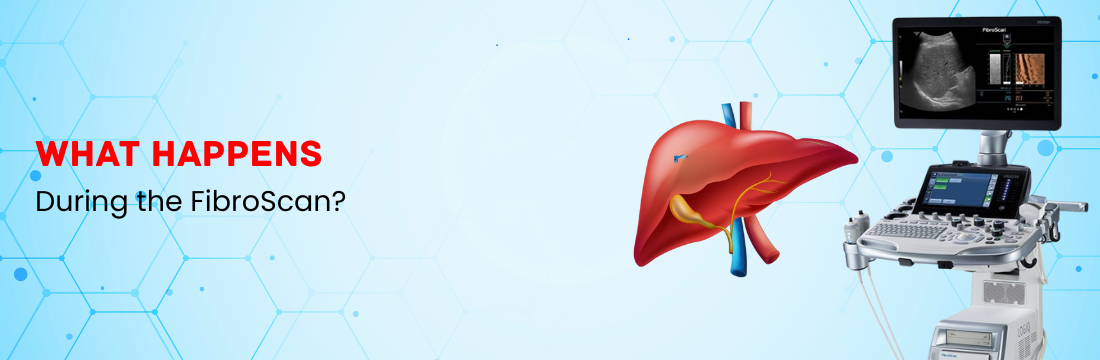
What Happens During FibroScan?
The FibroScan test takes only five to ten minutes on average and is entirely painless. Here’s what you can expect during the procedure:
- Positioning – You will be asked to lie comfortably on your back with your right arm placed behind your head. This helps stretch the area over the liver for accurate scanning.
- Gel Application – A small amount of water-based gel will be applied to your skin on the right upper abdomen. This improves the conductivity of the ultrasound waves.
- Probe Placement – The technician places the FibroScan probe, which looks like a small handheld device (similar to a flashlight), against your skin.
- Sound Wave Analysis – The probe emits ultrasound waves into your liver. You may feel a slight vibration but no pain. These waves measure how fast they travel through the liver tissue. Therefore, people find FibroScan cost-effective than biopsies.
- Multiple Measurements – To ensure accuracy, several readings are taken within a few minutes.
- Results – The device instantly analyses the wave speeds and displays an average stiffness score, known as the Liver Stiffness Measurement (LSM), in kilopascals (kPa).
Once the test is done, you can immediately return to normal activities—there’s no recovery time required.
How Does FibroScan Work?
The science behind FibroScan combines ultrasound imaging with a method called elastography. Here’s a simplified breakdown:
- Elastography Principle: Healthy liver tissue is soft and flexible, while fibrotic or cirrhotic tissue is stiff. FibroScan quantifies this stiffness.
- Ultrasound Waves: The probe delivers low-frequency sound waves into the liver. These waves move at different speeds depending on the density of the tissue.
- Wave Speed Analysis: If the liver is stiff (due to scarring), the waves travel faster. If it’s healthy, they move more slowly.
- Stiffness Measurement: The device translates this speed into numerical values (kPa).
- Clinical Relevance: Higher values suggest greater stiffness, which may indicate advanced fibrosis or cirrhosis.
This immediate, radiation-free method gives doctors direct insight into liver health, making it an invaluable diagnostic and monitoring tool.
Why FibroScan Matters
The FibroScan test has made a remarkable impact on liver care in India and globally for several reasons:
- Painless & Non-Invasive: No needle, no anaesthesia, no complications.
- Time-Efficient: Takes only a few minutes, compared to hours of preparation and recovery for a biopsy.
- Early Detection: Helps catch liver damage early, before symptoms become severe.
- Monitoring Tool: Useful for tracking disease progression or how well treatments are working.
- Patient-Friendly: Its simplicity encourages more people to undergo liver screening, leading to better outcomes.
Take Charge of Your Liver Health!
Your liver quietly performs hundreds of vital tasks every day without showing signs of distress until damage is advanced. That’s why proactive testing is so important.
Discussing your results can help you and your healthcare provider create a personalised plan for treatment, lifestyle changes, or follow-up monitoring.
By choosing non-invasive measures like FibroScan in Delhi NCR, you can take meaningful steps toward safeguarding your liver by ensuring long-term health and well-being.