



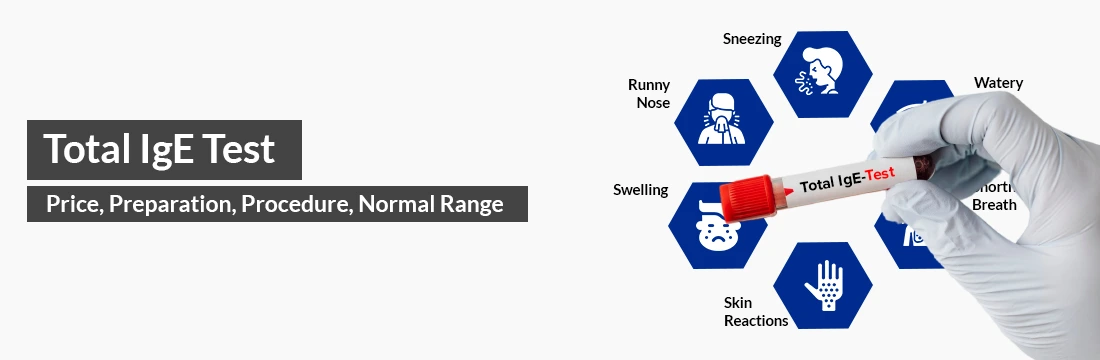
In this blog, we are ging to discuss about the IgE test its symptoms, preparation and procedure, normal range and how it can be controlled
What is the IgE Test?
The IgE Blood test is used to measure the amount of increased Immunoglobulin in your blood for any specific kind of allergen that causes allergy in the body IgE test is essential as it can help to get valuable information about the type of allergy present in our body and possible treatment that is required to cure the problem as soon as possible
Symptoms that Call for an IgE Test?
Symptoms are usually associated with allergies depending upon the type of allergen some of the common symptoms are

Preparation for IgE Blood Test
This test doesn't require any additional preparation but under some conditions, you have to follow some instructions given by the doctor
- Inform your doctor if you are on medication or a health supplement as it may interfere with the result.
- Wear loose-fitting clothes to allow easy access for your arm for blood sample collection.
- This test may require fasting Depending upon the doctor's suggestion.
Procedure for IgE Test
- Firstly, a phlebotomist may tie a band around your upper arm to ensure the vein is visible.
- They will clean the site using a disinfectant to minimise the risk of catching infection.
- A sterile syringe will be inserted into the vein to draw the appropriate amount of blood for the testing
- After blood sample collection, they will withdraw the needle and seal the site using an adhesive tape or cotton ball
IgE Test Normal Range
The normal value of IgE level in our body varies depending upon the Laboratory condition and the specific unit of measurement used normal value may vary according to the age group, Gender etc Below is the table that shows the high and low values of IgE.
Normal IgE level adult
>150 IU/mL
High IgE level adult
150IU/ml and it may vary from person to person depending on age group, Gender etc.
What If my IgE is high?
High IgE indicates an allergy that requires immediate diagnosis & treatment, consult your doctor and get the right treatment as soon as possible.
How Can I improve my IgE level?
You can improve your IgE level by stress management, using certain medications Avoiding smoke and by improving the air quality etc.
What Low Level of IgE show?
A low level of IgE means you are immune compromised and it may be a sign of Immunodeficiency that requires medical care.