



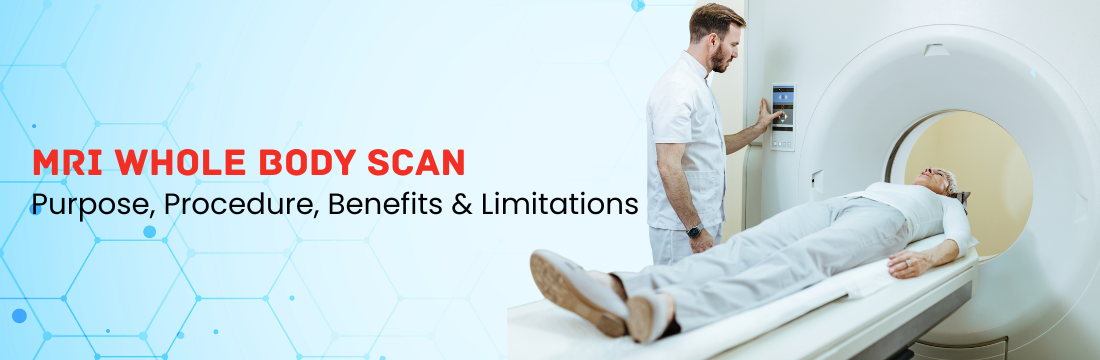
MRI is radio diagnostic procedure that is used to look for abnormalities in the whole body. MRI uses magnetic radiations for the detection of abnormalities in any part of the body. MRI is one of the best diagnostic procedures...
MRI is radio diagnostic procedure that is used to look for abnormalities in the whole body. MRI uses magnetic radiations for the detection of abnormalities in any part of the body. MRI is one of the best diagnostic procedures for soft tissues and other conditions of the body. Whole body MRI uses magnetic waves for the detection of abnormalities like cancers, fractures, injuries, blood vessels etc. MRI is the short form of Magnetic Resonance Imaging that uses magnetic waves to detect abnormalities. Patient is suggested to lie on the table attached with MRI machine and used to look for abnormalities. Table attached with MRI machine slides into the machine for the detection of abnormalities. Various types of MRI are present for diagnosis of different parts of the body. Patient can choose or doctor can suggest the best MRI required for the condition of the body.
MRI Whole Body
MRI (Magnetic Resonance Imaging) is one of the radio diagnostic procedures used to look for various abnormalities in the body. Whole body is widely used MRI technique which can be used for the detection of abnormality in any part of the body. There are various types of MRI procedures which are used to look for abnormalities in the body. Whole body MRI is very useful as it can detect abnormality in any part of the body making it MRI of choice. MRI uses magnetic waves for the detection of abnormalities and this procedure is not used in the patients having body implants like peace maker, rods or plates in bones. Because magnetic waves can displace the metallic objects in the body.
Purpose of Whole-Body MRI
- MRI whole body is helpful in detecting cancer tumors
- MRI whole is helpful in detecting non-cancerous tumors
- Looking for hereditary risks
- Used to look for musculoskeletal abnormalities
- Helpful in detecting infections
- Helpful in detecting inflammatory diseases
- MRI is effective in detecting vessel condition
- Helpful in detecting chronic diseases
- Helpful in detecting autoimmune disorders
- Helpful in screening the symptomatic abnormalities
Procedure of Whole-Body MRI
- Preparation:
- Patients are asked to remove metal objects such as jewelry, watches, or belts.
- A medical history is taken, especially concerning metal implants or pacemakers.
- Fasting may be required if contrast dye is used.
- Positioning:
- The patient lies on a flat table that slides into the MRI machine.
- Earplugs or headphones are given to reduce the noise of the machine.
- Scanning:
- Magnetic waves produced by machine help in generating detailed images in cross section.
- Contrast agent is used for strong and detailed scanning of the structures in the body.
- Duration:
- Time duration taken for whole body MRI can be between 45 to 90 mintues which can increase or decrease depending on type of MRI and whether using the contrast or not.
- Post-Procedure:
- If patient is not given sedative or contrast, patient can resume his daily routine work.
- Report is prepared by radiologist after looking in the images of the test.
Benefits of Whole-Body MRI
- There is no radiation involvement for MRI tests
- MRI provides comprehensive images, which help in easy and early detection of abnormalities.
- MRI helps in early detection of abnormalities in the body.
- MRI is very effective in detecting soft tissue abnormalities like brain, muscles etc.
- MRI can detect cancers in early stage.
- MRI helps to monitor the diseases and treatments given to patients.
- MRI is non-invasive so required no operative procedures.
- Patient can resume work after the scan.
- Whole body MRI can detect abnormalities of various organs in one test.
Limitations of Whole-Body MRI
- MRI is costly comparing other tests like X-ray and CT scans.
- MRI takes more time comparing X-ray and USG procedures
- Some patients have fear of closed spaces in the machine.
- Too much of noise from machine.
- Some people have allergies with contrast material of MRI
- MRI sometimes show false positive which requires more testing.
Cost of Whole-Body MRI in Delhi NCR
The cost of MRI whole body in Delhi NCR is between INR 40,000 to 80,000. The costly may slightly differ from one place to another place depending on various factors like location, technology, contrast used etc. In some diagnostic centers or hospitals some other tests are given with MRI whole body as package.
Different Types of MRI tests Available
- MRI Whole body (Book Now)
- MRI Head Screening (Book Now)
- MRI Screening of Brain (Book Now)
- MRI Screening Cervical Spine (Book Now)
- MRI Face & Neck (Book Now)
- MRI Lower Abdomen (Book Now)
Click Here to any type of MRI Scan
Conclusion
MRI is the short form of Magnetic Resonance Imaging that uses magnetic waves to detect abnormalities. Patient is suggested to lie on the table attached with MRI machine and used to look for abnormalities. Table attached with MRI machine slides into the machine for the detection of abnormalities. Various types of MRI are present for diagnosis of different parts of the body. Whole body MRI is very useful as it can detect abnormality in any part of the body making it MRI of choice. MRI uses magnetic waves for the detection of abnormalities and this procedure is not used in the patients having body implants like peace maker, rods or plates in bones. Because magnetic waves can displace the metallic objects in the body.
FAQs on Whole-Body MRI
Can everyone undergo MRI?
People with pacemakers or certain implants may not be eligible.
Does an MRI require contrast injection?
Not always; contrast is used only when detailed imaging is required.
Can MRI whole body detect cancers?
Yes, whole body MRI can detect cancer in any part of the body.
Is MRI whole body non-invasive?
Yes, MRI whole body is non-invasive.
Is MRI whole body better than USG?
Whole body MRI is more effective than USG.