



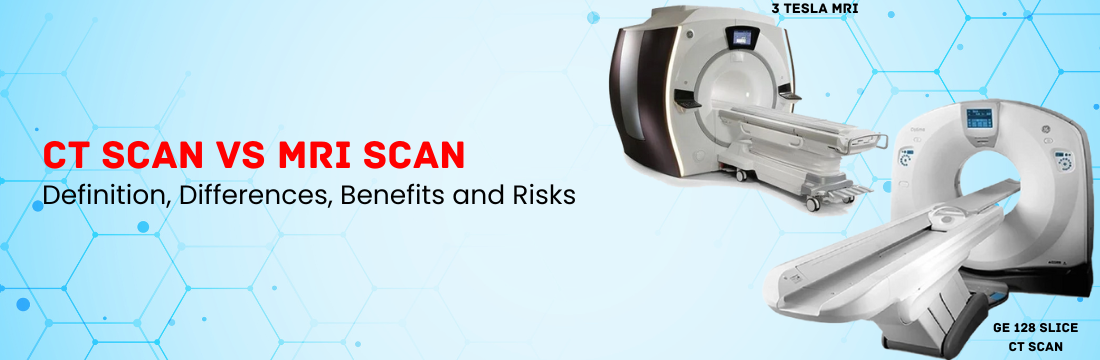
In this article, we will discuss the difference between MRI Scan and CT scan, we will also discuss some questions related to MRI scan and CT scan.
MRI scan is the short form of Magnetic Resonance Imaging and CT scan is the short form of Computed Tomography. MRI and CT scan are radiological procedures used to diagnose abnormalities in the body. MRI is a more advanced scan that uses strong magnetic fields and radio waves to create detailed images of organs and tissues, whereas CT scan uses X-rays to detect abnormalities by creating 3D images of tissues or affected areas. Both procedures can be used for detecting cancers in various parts of the body, but MRI provides greater detail of soft tissues, allowing for more precise detection of tumors and abnormalities, especially in the brain, spine, and joints. This helps in early and effective treatment planning.
What is MRI scan?
MRI is the short form of Magnetic Resonance Imaging scan, which is a diagnostic procedure for the detection of abnormalities in the body. MRI uses magnetic waves for the detection of tumors, injuries, fractures, bone dislocations etc. Patient with metallic implants should consult the doctor first because magnetic waves can displace the metallic implants. MRI can detect the abnormalities more accurately in soft tissues allowing more precise detection of abnormalities.
What is CT scan?
CT scan, short for Computed Tomography, is a diagnostic imaging technique used to identify abnormalities within the body. It combines motorized X-ray equipment with computer processing to produce detailed cross-sectional, 3D images of internal structures. This enables accurate detection of issues, allowing for timely diagnosis and treatment. CT scans are commonly used to visualize bones, organs, soft tissues, joints, and tumors.
MRI scan Vs CT scan
MRI (Magnetic Resonance Imaging) CT Scan (Computed Tomography) Uses magnetic fields and radio waves Uses X-rays and computer processing No ionizing radiation involved Uses ionizing radiation (X-rays) Better for soft tissue imaging (brain, muscles, ligaments) Better for bone injuries and lung imaging Loud and enclosed spaces may cause discomfort or claustrophobia Quieter and open, more comfortable for most patients Generally more expensive Less expensive compared to MRI Not safe for patients with metal implants or pacemakers Safe for most metal implants Can perform functional MRI (fMRI) to study brain activityCannot assess functional brain activity
Uses gadolinium-based contrast (lower allergy risk) Uses iodine-based contrast, which may cause allergies Ideal for brain, spine, joints, and soft tissues Ideal for trauma, chest, abdomen, and bone injuries Slower, usually 30–60 minutes Faster, typically 5–15 minutesWhat are the benefits of CT scan?
Here are the benefits of CT scan:
● Quick and Painless
● Detailed Bone Imaging
● Detects Internal Bleeding
● Guides Procedures
● Widely Available etc.
What are the benefits of MRI Scan?
Here are the benefits of MRI Scan:
● No Radiation Exposure
● Superior Soft Tissue Contrast
● Effective for Neurological Disorders
● Functional Imaging Capabilities
● Multi-Planar Imaging etc.
What are the risks of CT scan?
Here are some risks associated with CT scan:
● Radiation Exposure
● Allergic Reaction to Contrast
● Not Recommended for Pregnant Women
● Cumulative Effect
● May Miss Small Soft Tissue Lesions
What are the risks of MRI scan?
Here is the list of risks associated with MRI scan
● Not Safe with Metal Implants
● Contrast Agent Risks
● Claustrophobia and Anxiety
● Lengthy Procedure
● Limited Use in Emergencies etc.
Which is the best scan MRI or CT scan?
There is not any specific point where we can say which scan is best. Both scans have their advantages and limits. Healthcare expert suggests the scan after assessing the condition of patient and abnormality that patient is suffering from. MRI is good for detection of soft tissue abnormalities and brain or spinal cord imaging where as CT is good for bone imaging, emergency situations, lung and abdominal imaging etc.
Frequently Asked Questions (FAQ)
What is the full form of MRI scan?
Full form of MRI is Magnetic Resonance Imaging scan.
What is the full form of CT scan?
Full form of CT is Computed Tomography
Can MRI scan detect tumors in the body?
Yes, MRI scan can detect tumors in the body
Where to go for MRI scan in Delhi NCR?
Patient can visit Ganesh diagnostic and Imaging Centre in Delhi NCR for any type of MRI scan at affordable rates and quality results.