



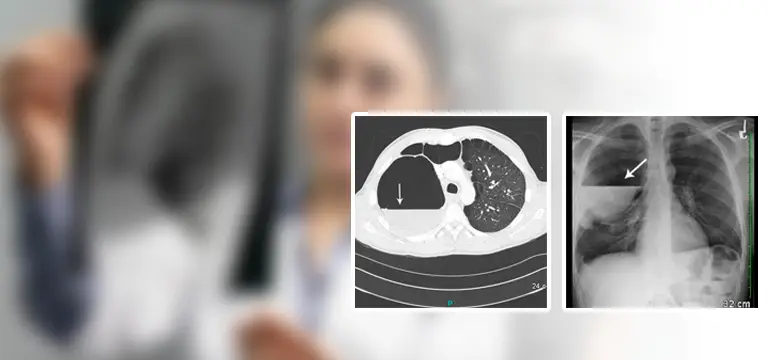
A bulla is referred an air-filled space (about 1 cm in diameter) within the lung, which is formed due to the adverse effects of emphysema on the lung tissue.
A bulla is referred an air-filled space (about 1 cm in diameter) within the lung, which is formed due to the adverse effects of emphysema on the lung tissue.
So, what is Emphysema?
It is a condition in which there is limited airflow and permanent enlargement of the alveolar space beyond the terminal bronchioles.
Most people (almost 80%) with bullae also suffer from pulmonary emphysema, this is termed "bullous emphysema."
Bullous emphysema is a division of COPD (chronic obstructive pulmonary disease), a disease that causes an obstructive airway and with a high mortality rate.
What Are the Causes of Bullous Emphysema?
Two of the most common perpetrators of bullous emphysema are smoking and alpha-1 antitrypsin deficiency (A1AD or AATD), which is a genetic autosomal codominant disorder. The other less prominent factors leading to underlying emphysematous destruction of lung parenchyma include smoking marijuana or crack cocaine or abusing intravenous drugs.
Bullous emphysema impales more than five percent of the population worldwide, almost 12 percent of adults over the age of 30. In the U.S., it is the third-highest cause of death and kills more than 120,000 people every year.
Causes of Bullous Emphysema
Bullous emphysema is mainly due to the chronic inflammation of the small air sacs (alveoli) in the lungs. This is primarily induced by factors like smoking cigarettes.
When this inflammation turns chronic, it damages the walls of the alveoli, causing them to become brittle and break down. So, due to this, the affected airspaces become enlarged permanently. This process is responsible for the formation of bullae, which are huge spaces filled with air within the lungs. It is the intrinsic characteristic of bullous emphysema.
When this happens, there is a decline in gas exchange and limited airflow through decreased elastic recoil of the chest wall.
As for pathological changes in bullous emphysema patients, there are a higher number of goblet cells in the airways, which are responsible for producing mucus. The mucous glands also undergo hyperplasia, which means there is excessive growth of these glands. Moreover, fibrosis occurs, leading to the formation of scar tissue in the lungs. The airways collapse due to the lack of support from the destroyed alveoli (small air sacs).
These changes lead to a decrease in gas exchange and a limitation of airflow within the lungs. As a result of this, chronic hypoxia happens, which is a condition of low oxygen levels in the body, and hypercarbia, a condition where there is a higher level of carbon dioxide in the blood. These conditions are direct results of the inability of the lungs to properly exchange gases, resulting in insufficient oxygen supply and inadequacy in removing carbon dioxide.
Role of PET Scan in Assessing Lung Bullae
PET (Positron emission tomography) scan is a non-invasive medical imaging technique based on the principle of usage of a radioactive tracer that helps to detect and measure metabolic activity in the human body. It is useful in the diagnosis of lung bullae.
As far as lung bullae are concerned, a PET scan can provide the doctor with much information on the metabolic activity of the affected lung tissue. Due to Bullae, there is impaired metabolic activity compared to healthy lung tissue. So, PET scans can assist by differentiating between metabolically active areas and inactive regions within the lungs.
A PET scan is conducted by using a radiotracer, which is usually fluorodeoxyglucose (FDG). PET scans can find out when there is increased glucose uptake, which is an indication of cellular activity.
When scanning for lung bullae, the areas of the lung with active inflammation, infection, or malignancy will show higher FDG uptake against the inactive bullae.
PET scans can also tell the doctors how much the lung is affected and help in studying the underlying conditions linked to the bullae, whether it is pulmonary malignancies or lung infections.
A PET scan can also help in detecting the functional lung reserve and the overall lung function in people who have bullae.
Pet Scans Combined With Other Techniques
In evaluating lung bullae, PET scans are used in conjunction with other modalities like CT (computed tomography) scans so that there is a more detailed evaluation of the problem.
A PET-CT scan is a combined imaging technique that detects the precise location and categorization of the bullae. It results in better diagnosis, making it easy for the doctor to formulate a treatment plan.
Intervention
Long-term medical treatment for bullous emphysema involves numerous methods:
- Short-acting beta agonists like albuterol are used when there is acute breathlessness and bronchodilation.
- Anti-muscarinic agents such as tiotropium, ipratropium, and umeclidinium are used to dry secretions, reduce bronchoconstriction, and inhibit excessive fluid production in the bronchi.
When there is severe deterioration of bullous emphysema it should be managed with:
- Oxygen therapy
- Albuterol-ipratropium combination
- Short-term systemic glucocorticoid therapy with prednisone for a week
- Assessing carbon dioxide retention through arterial blood gas (ABG) analysis.
- Chest X-ray is crucial for evaluating pneumothorax or new infiltrations that may require antibiotic treatment.
Identifying the triggers, such as respiratory infections, is also important in dealing with the worsening situation.
Doctors mull surgical interventions for bullous emphysema in cases of:
- Moderate to severe dyspnea
- Bullae occupying more than 30% of the hemithorax
- Complications like pneumothorax, infection, or hemoptysis.
Surgical treatments include lung volume reduction surgery (LVRS) and lung transplantation when medical management does not work.
Conclusion
So, a PET scan is a great evaluation technique in the case of active lung bullae shedding light on its metabolic activity, pinpointing the underlying causes, and guiding the doctors during the treatment processes. Its combination with other imaging modalities only enhances the diagnosis for a better outcome for the patient.
FAQs
What causes bullae in the lungs?
Smoking tobacco (cigarettes) is one of the most common causes of emphysema. And emphysema is also the most common cause of massive bullae in the lungs. There are a few cases of bullae in the lungs due to bronchial illnesses resulting from high air pollution levels, or occupational hazards like exposure to chemical fumes.
Is a bulla in the lung serious?
Bullae of the lung are not harmless. The threat of rupture of the thin pleural wall is also common. Many cases report fatal spontaneous pneumothorax directly referable to such a mishap.
How do you treat lung bullae?
The doctor usually prescribes medications called bronchodilators to help manage the patient’s symptoms. The patient generally breathes these medications in via an inhaler. Bronchodilators are helpful by improving airflow to and from the patient’s lungs and relieving breathlessness by relaxing the airway muscles.
What happens if a lung bullae burst?
A pulmonary bleb is a small pocket of air that forms between the lung and the outer surface of the lung, which is located in the upper lobe. When a bleb bursts, the trapped air is released into the chest cavity, leading to a condition called pneumothorax. As a result, air accumulates between the lung and the chest cavity.
How do you prevent bullae?
The foremost solution and the best way to forbid bullous emphysema is by quitting and or not smoking. Smoking is the major cause of this disease, as most patients with emphysema have a history of smoking.
Is Bulla curable?
Bullae are usually curable and very easy to treat. They mostly resolve on their own sans treatment when it is not due to an illness or skin condition. However, in some cases, it is possible to have complications. If it remains open or drained, bullae can become infected.
What are the symptoms of lung bulla?
Common symptoms include breathlessness or tightness in the chest, particularly when there is exertion. Another symptom is a cough. There is sputum production also. Occasionally, the patient may have a feeling of a full stomach or bloating and prominent air-trapping on pulmonary function testing.
Can lung bullae cause pain?
When there are bullae in the lungs it often shows asymmetry and a higher occurrence in the upper lobes. This progressive condition drastically impairs oxygenation. As a result, people affected by bullae may experience various distressing symptoms, including shortness of breath (dyspnea), low oxygen levels (hypoxia), discomfort in the chest accompanied by pressure, coughing up blood (hemoptysis), and even spontaneous pneumothorax.
Is hot water good for the lungs?
As a result of steam there is warmth and moisture in the air. This can help people to breathe better and also in loosening mucus. Inhaling water vapor can induce immediate respite and help people in breathing more easily.
How can I make my lungs good again?
Following are some of the ways to keep lungs in good shape:
- Stop smoking
- Getting regular exercise.
- Eating healthy.
- Keep weight in control
- Practicing deep breathing
- Going for yearly health checkups.
- Getting vaccinated
How quickly can lungs recover?
Once you quit smoking, there will be improvements in your lung function with increased circulation within the first month. After about nine months, the cilia, tiny hair-like structures in the lungs, start to work normally.