



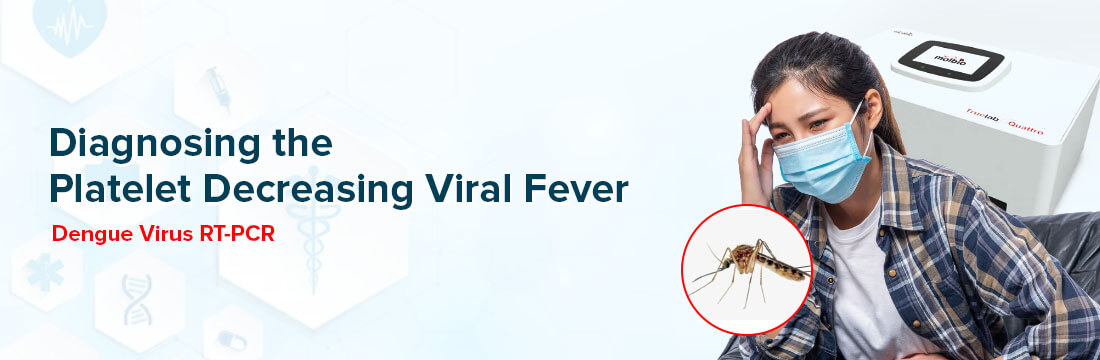
The Break-bone fever or Dengue fever is one of the pre-existing arthropod-transmitted diseases, which is dominating the world of viral disease with same intensity since years. The Dengue fever or Infection is generally...
The Break-bone fever
The Break-bone fever or Dengue fever is one of the pre-existing arthropod-transmitted diseases, which is dominating the world of viral disease with same intensity since years. The Dengue fever or Infection is generally diagnosed in people of all ages, i.e. from children to the old age people. Its severity is observed by the symptoms of high fever, steep decrease in platelet count, body and head aches and patient if left untreated despite of this condition, Dengue infection can be fatal as well according to the studies of World Health Organization report.
Dengue Fever: Causative agent
Dengue disease is caused by Dengue Virus (DENV), which is generally transmitted by a type of day-biting Aedes mosquito. Dengue Virus (DENV), which has 4 serotypes, i.e., DENV-1, DENV-2, DENV-3, DENV-4, get transmitted through Aedes aegypti that acts as carrier or vector of this disease.
Origin and Infection toll
Previously being found in America, Dengue was not a threat for rest countries in world. But, around 2019, Dengue fever and severe cases of it, is vastly found in other countries like India, Malaysia, etc. The Dengue Virus infects 100-400 million people per year worldwide, which came in the form of endemic in 100 and more countries in world.
Mode of transmission
Firstly, the Aedes aegypti mosquito feeds upon the blood of a Dengue Virus infected person and uses mosquito’s mid-gut to replicate its number and reside in the salivary gland of the mosquito. The virus becomes infectious in the incubation time within the gut of the mosquito, and after that, this vector can transmit the disease causing virus in any phase of its life cycle.
Mode of Action
Virus particle, when come in touch with the human cell, form endosome. The viral RNA take control over the normal cytogenetic process of the cell, and replicates its own genome and form new virion particle and thus lysing the cell and spreading to attack other cells, thus spreading the disease in the whole body.
Structure of Dengue virus (DENV)
The shape of the Dengue virus is irregularly spherical, and size is about 25nm radius. It has 180 copies of E and M proteins which look similar to those of the spike proteins of Corona Virus, which are embedded within the envelop of the virus. The envelop hides within itself, nucleocapsid, which contain a single stranded Ribonucleic Acid (RNA).
Risk factors of Acquiring Dengue Fever
Urbanization: Growth and useless encroachment of rural areas with no proper planning for set up of township or urban area, cause danger from Dengue.
Population density: Excessive dense population in cities and townships lead to the risk of community infection of Dengue fever.
Lack of hygiene:Due to stagnant rain water, and unclean environment in the surrounding society, the mosquito born and the larva get suitable place for growth. Then they transfer virus from one person to the other thus making a chain of infection.
Mosquito control activity: Lack of mosquito control activity in society promotes the growth of infectious mosquitos, and thus helping in the transmission of DENV.
People’s carelessness towards the severity of the disease also prevents elimination of mosquito growth factors.
Symptoms of Dengue Fever
- High fever
- Headache
- Rash, Muscle and joint pain
- Nausea and vomiting
- Thrombocytopenia (rapid decline in number of platelets, i.e., below 1.5 lakh per mm3)
- Can severely affect lungs, liver, heart
- Affect bone marrow thus platelet decreases.
Treatment and Management
- No specific antivirus is discovered for Dengue Virus yet.
- Intake of healthy food and fruits, like kiwi, papaya, pomegranate, spinach
- Intake of oral rehydration complexes
Prevention Tips of Dengue
- Wearing loose fitting long sleeve clothes.
- Use of Insect repellent.
- We should control mosquito birth on stagnant water in the surrounding locality.
- We should use mosquito net.
Book free consultation! Call at: 011-47-444-444, 011-47-333-333, 9811067479, and 9810183948
Samples to be assessed for it
- Whole blood
- Cerebrospinal fluid
- Plasma
Time of diagnosis
- The sample should be given for diagnosis of Dengue Virus after 7 days of onset of fever.
What are the techniques to diagnose DENV in patient’s blood?
- ELISA to detect NS1 antigen using IgM (Microbiological technique)
- DENV 1-4 RT-PCR (better as it can diagnose at earlier stage of infection)(Molecular biology technique); typically of two types: Multiplex and Trioplex
Multiplex RT-PCR assay: It is for identification of serotype of DENV after confirming about Dengue virus.
Trioplex RT-PCR assay: It is for the preliminary identification of disease where symptoms might include as those of Chikungunya, Dengue, Zika virus.
Real Time Polymerase Chain Reaction (RT-PCR) for detection and serotype identification of Dengue Virus
Real time Polymerase Chain Reaction is a type of rapid molecular diagnostic test, which can easily be called as Nucleic acid test.
As the Dengue Virus contains Ribonucleic acid as the nuclear component, we need to use Reverse Transcriptase to proceed with the Polymerase Chain Reaction test. Real time PCR technique is done for rapid identification of Dengue Virus and differentiation about its serotype DENV-1, DENV-2, DENV-3, and DENV-4.
Steps of Real Time-PCR
- Extraction: Samples are treated with chemicals to have extracted nucleic acid from them, i.e., Ribonucleic acid (RNA) in case of Dengue Virus, which is a RNA virus.
- Reverse Transcription: The extracted nucleic acid, RNA, is then reversely transcribed to form DNA.
- Performing Polymerase Chain Reaction:Denaturation, Annealing, Extension or Amplification of the targeted genetic region for the diagnosis of the virus and its serotype.
- Repetition of the cycle: Total number of cycle for the process will be 40.
- Time of report: The report for Dengue virus diagnosis with Real Time -PCR technique is 24 hours.
Obtaining the result
Positive result in Multiplex RT-PCR assay for the Dengue virus means the patient is infected with Dengue and the serotype will be confirmed clinically. Serotyping and quantitation is confirmed by using definite probes.
Real Time-PCR test for Dengue Virus at Ganesh Diagnostic and Imaging Centre
Ganesh Diagnostic and Imaging Centre, a renowned and leading medical diagnostic laboratory in India, is having the best and highest accurate Real Time-PCR machine, to diagnose Dengue Viral Disease in the most reliable way, reasonable price, and less time.
Latest Real Time PCR machines used for diagnosis of Dengue Viral disease are listed here:
- Truelab Quattro Real-Time Quantitative PCR Machine
- CFX96 Bio-Rad Real-Time PCR Machine
- Genetix HT 96 Purifier Machine
- Genetix 32 purifier machine
- Biorad CFX96 Real Time System
- Truelab® Uno Dx Real Time Quantitative Micro Pcr Analyzer
Why to choose Ganesh Diagnostic and Imaging Centre for Real Time PCR Test to diagnose Dengue viral disease?
- NABL, NABH accredited laboratory
- 24×365 open for patients of any kind of test, with availability of expert staffs
- Free home collection of all types of samples by Expert technicians and phlebotomists.
- Master Technicians at all departments
- Doctorate (Ph.D. & MD) Scientific officers and In-charges at all departments
- 50% Discount at all kind of tests of all departments
- Online availabilityof reports for all kinds of tests.
- Extra-caring and helpful staffs
- Ambulance availability for patients 24×365 free of cost
- Free transport facility for patients who come from distant locations
Book Your Appointment Now!
Frequently Asked Questions
1. Why Platelet counts get decreased in Dengue?
The Dengue Virus attacks the bone marrow, from where platelets are generated. So, in Dengue infection or Fever, platelet count got decreased.
2. What are the different types of Dengue virus?
There are 4 types of Dengue virus serotypes; they are DENV-1, DENV-2, DENV-3, DENV-4.
3. What are the symptoms for severe Dengue fever?
High fever, painful joints and muscles, headache, with heavy decrease in platelets, rashes, abdominal pain, and excessive tiredness are the symptoms of severe Dengue where you should consult doctor immediately.
4. Who transmit Dengue?
Aedesaegypti, a mosquito which bites and feeds in the day time is considered as the main transmitter of Dengue disease.
5. How to prevent mosquito growth in surroundings?
Here are the following ways to prevent mosquito growth in surrounding area:
- Clean or eliminate stagnant water
- Keep surrounding garbage-free
- Avoid densely-populated area for residence
- Spread insecticides or mosquito repellent.