


Liver health plays a prominent role in the comprehensive well-being of a human. It helps in detoxifying the blood by producing the necessary proteins. Further, it supports an effective digestive system.
Liver health plays a prominent role in the comprehensive well-being of a human. It helps in detoxifying the blood by producing the necessary proteins. Further, it supports an effective digestive system.
When the liver cannot function properly, things can be life-threatening. Initially, doctors examine liver biopsies to assess liver health. While accurate, biopsies require inserting a needle into the liver, making them invasive, sometimes painful, and often stressful for patients.
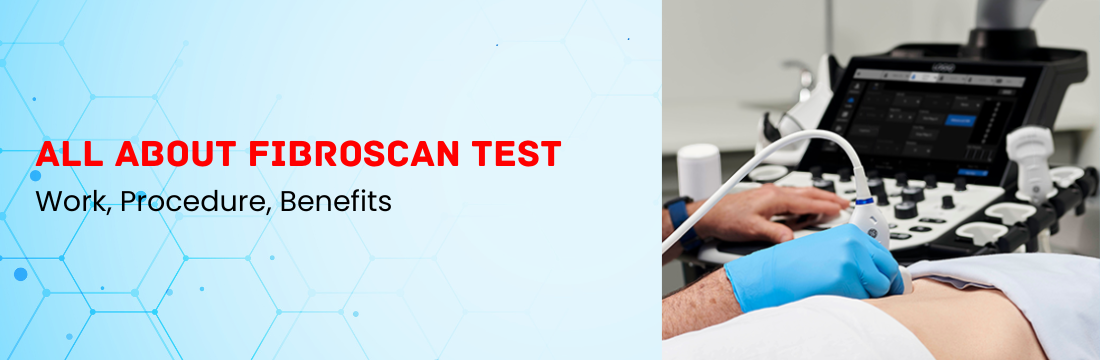
The FibroScan test is one of the innovative and non-invasive tools that allows doctors to assess liver stiffness quickly and safely without the need for surgery or prolonged recovery.
What is the FibroScan Test?
FibroScan is a diagnostic test designed to measure the stiffness of liver tissue. Liver stiffness gives an important clue to detect fibrosis. It refers to the scarring of liver tissue caused by conditions like hepatitis, cirrhosis, fatty liver disease, and alcohol-related damage.
A biopsy generally collects tissue samples to gather information, while the FibroScan test leverages ultrasound-based technology to collect real-time data about the liver condition.
How Does FibroScan Work?
The function of FibroScan starts with low-frequency sound waves sent through the liver. These waves often travel at different speeds depending on the elasticity and stiffness of the liver tissue.
A healthy liver is soft and flexible, while a diseased liver becomes stiff due to scar tissue buildup.
- The quicker the sound waves travel, the stiffer the liver.
- Greater stiffness usually indicates more advanced fibrosis or cirrhosis.
The FibroScan provides doctors with a clear, numerical measurement of liver stiffness, helping guide treatment decisions.
What to Expect During the Procedure
The FibroScan procedure is straightforward, painless, and takes only about 10 to 15 minutes. Here is a detailed step-by-step look at the process:
- Preparation – You may be asked to fast for two to three hours beforehand.
- Positioning – You’ll lie down comfortably on your back with your right arm raised above your head to give clear access to the liver area.
- Scanning – A technician applies a water-based gel to your skin, then places the FibroScan probe just above the liver.
- Measurement – The device sends sound waves into your liver and automatically records the results.
Most patients experience nothing more than a light tapping or vibration sensation during the test. Immediately afterwards, you can return to your daily activities without any recovery time.
Key Benefits of FibroScan
- Non-Invasive – No needles, no incisions, and no risk of bleeding or infection.
- Quick and Painless – The entire process is completed in minutes.
- Immediate Results – Doctors can interpret data on the spot and discuss next steps with patients.
- Accurate and Reliable – Research shows FibroScan results are comparable to biopsy findings in many cases of fibrosis and cirrhosis.
FibroScan vs. Liver Biopsy
- Invasiveness: A biopsy is invasive and carries risks like bleeding, pain, or infection. FibroScan eliminates these risks.
- Convenience: A biopsy usually requires sedation and hours of recovery. FibroScan is quick and allows patients to resume normal life immediately.
- Accuracy: While a biopsy remains the gold standard, it examines only a small section of the liver. FibroScan provides a broader assessment of the entire organ, making it a practical and highly informative tool.
Understanding FibroScan Results
The main outcome of a FibroScan test is the Liver Stiffness Measurement (LSM), reported in kilopascals (kPa):
- Less than 6 kPa: Normal, healthy liver
- 6 to 10 kPa: Mild fibrosis
- 10 to 14 kPa: Moderate fibrosis
- Above 14 kPa: Severe fibrosis or cirrhosis
These numbers should always be interpreted by your healthcare provider, who will consider your medical history, blood tests, and other findings alongside the FibroScan result.
Who Should Consider FibroScan?
FibroScan can be a valuable screening or monitoring tool for several groups:
- Patients with chronic liver disease such as hepatitis B or C, fatty liver disease, or alcohol-related liver damage.
- At-risk individuals with obesity, diabetes, a family history of liver disease, or heavy alcohol consumption.
- People with past liver conditions need regular monitoring to check for progression or recovery.
Book Now your FibroScan
Get Your FibroScan Test Today!
FibroScan represents a new era in liver health monitoring that puts patient comfort, safety, and convenience at the forefront. Its ability to deliver fast, accurate, and painless results has made it an invaluable alternative to the traditional biopsy for many people.
If you have a liver condition or belong to a higher-risk group, consider Diagonistics from Ganesh Diagnostic & Imaging Centre Pvt. Ltd for the FibroScan in Delhi NCR. Taking this simple step could be vital in protecting your liver health and supporting your overall well-being.