



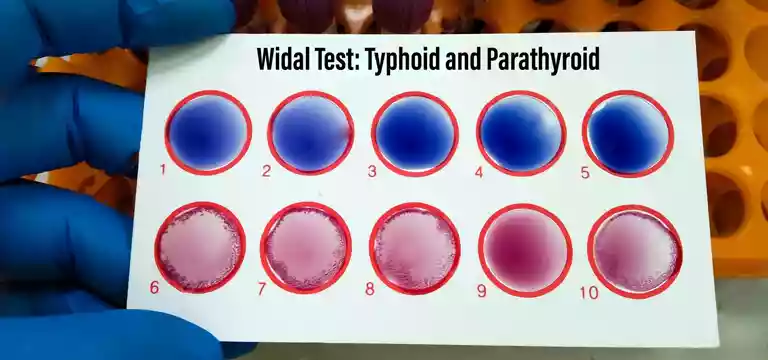
Widal test is a serological test, more appropriately an indirect agglutination test used for the diagnosis of Typhoid fever caused by the bacteria Salmonella typhi. It is used for the detection of antibodies that are produced...
What is the Widal test?
Widal test is a serological test, more appropriately an indirect agglutination test used for the diagnosis of Typhoid fever caused by the bacteria Salmonella typhi. It is used for the detection of antibodies that are produced as a response to salmonella infection by your body. The widal test was invented by Georges Fernand Widal and is named after him.
Typhoid fever, also known as enteric fever or undulant fever is a serious infection and can be life-threatening. It is endemic in many regions especially developing countries like India, Africa and south-east Asia. Humans are the host and carrier of salmonella typhi. It is usually transmitted from one person to another through food and water contaminated with salmonella. Upon ingestion, the bacteria multiply rapidly, enter circulation and spread through the bloodstream. The incubation period of salmonella typhi ranges between 6-30 days after which the signs and symptoms of typhoid fever appears clinically.
What are the uses of Widal test?
Widal test is used for the diagnosis of typhoid fever. It is indicated in the following situations:
- Typhoid fever
- To differentiate recent typhoid infection from past infections.
- H/o typhoid infection
- To evaluate cases of high fever
- Food poisoning
- Traveler’s diarrhea
- Evaluation of patients with the following symptoms and signs:
- Anorexia
- Fever with chills
- Body ache
- Abdominal pain
- Nausea and vomiting
- Diarrhea
- Constipation
- Rose spots: faint pink spots usually on the trunk region
- Headache
- Cough
- Weakness
- Fatigue
- In severe cases confusion and agitation
What are the complications of typhoid fever?
Severe complications of typhoid fever usually occur in patients with >2 weeks of illness or those who have either not received treatment or received improper treatment and accounts for approx. 10% cases. Case fatality rate of enteric fever ranges between 1-4% and is higher in untreated patients and children 1:160
Acute infection
H antigen- also known as the flagellar antigen.
>1:160
*Recovery stage or
*Remote/past infection or
*Immunized state
Vi antigen- Vi stands for virulence and is capsular antigen.
Positive
Carrier state
Normal range for Widal test?
When the titers for O (Somatic) and H (Flagellar) antigens is